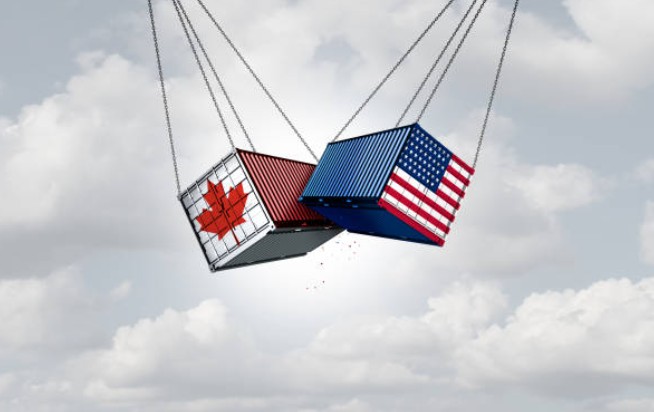
President Trump’s tariffs could be costly to his country, writes Peter Watson.
In simple terms a tariff is nothing more than a tax that the United States charges on goods imported to their country.
For example, if an Ontario wine producer exported their product to the US it would be sold like any other product in their country. The only difference is that in addition to paying the price of the bottle of wine, the customer would also be charged a tariff tax.
It is the American consumer that pays the tax and that tax goes to the American government. From a financial perspective it hurts the consumer because it increases the cost but benefits the American government because it receives the tax.
The second motivation is if Canadian wine becomes more expensive it will encourage the American purchaser to buy their domestic wine. President Trump is attempting to get imported products that are sold in their country to be produced in the US.
It hurts the Canadian wine producer because wine sales to the United States will decline. The tariff tax on a bottle of wine is a simple example. We will consider two more types of transactions.
The loser in these scenarios is the American consumer. They will now pay more for those purchases.
The potential problem for the United States is this new tariff taxes will increase the inflation rate in their country. That will result in higher interest rates that will be needed to slow down the inflation rate.
Higher interest rates will be difficult on American consumers and businesses that have loans, plus it will be incredibly hard on the federal government because of the interest it pays on its massive and growing debt.
The US tariff idea could backfire.
Peter Watson, of Watson Investments MBA, CFP®, R.F.P., CIM®, FCSI offers a weekly financial planning column, Dollars & Sense. He can be contacted through www.watsoninvestments.com